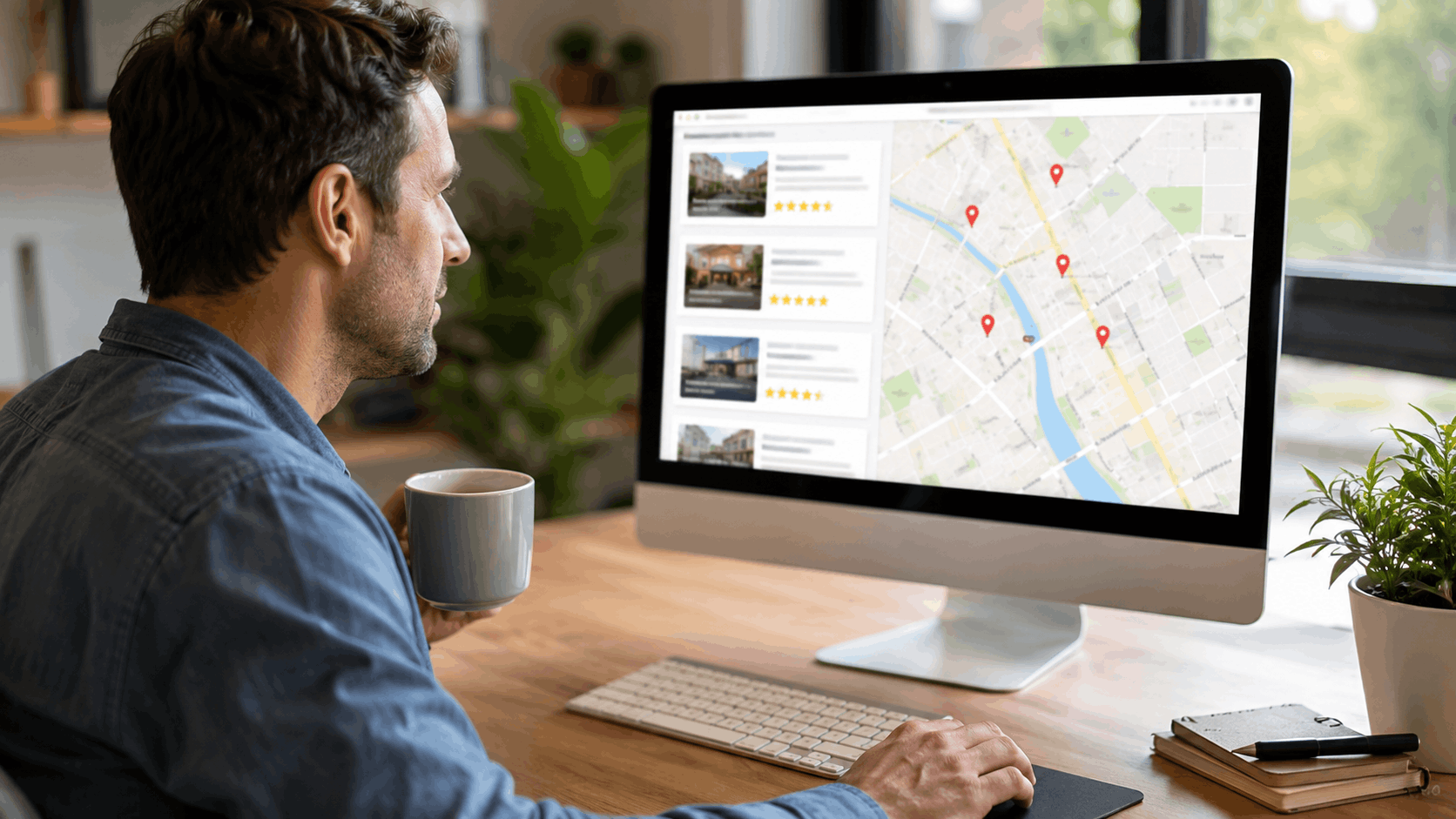
Search for a plumber, a coffee shop, or a dentist on your phone, and the first thing you usually see is a small map with three business listings under it. That block is the local map pack. It sits above the regular blue links, and for most local searches, those three spots pull the bulk of the clicks and calls.
People rarely scroll past it. When someone is standing on a corner looking for help right now, they tap one of those three names and go. That is why so many business owners want to know exactly how Google decides which businesses show up in the local map pack.
The short answer is that Google weighs a handful of signals and ranks businesses for each individual search. The longer answer is what this guide covers, step by step, with the practical fixes that move the needle.
- 01The Three Things Google Uses to Rank Local Businesses
- 02Your Google Business Profile: The Foundation of Map Pack Ranking
- 03Why Reviews Carry So Much Weight in Local Search
- 04How Distance and Searcher Location Change Your Results
- 05Links, Citations, and Mentions That Build Prominence
- 06Website Signals Google Reads Behind the Scenes
- 07Common Mistakes That Keep Businesses Out of the Map Pack
- 08A Practical Plan to Improve Your Map Pack Ranking
- 09Final Thoughts
- 10Frequently Asked Questions About the Local Map Pack
The Three Things Google Uses to Rank Local Businesses
Google has been open about the broad strokes of its local ranking factors. The official Google Business Profile help docs point to three main signals: relevance, distance, and prominence. Everything else feeds into one of these three buckets.
The google local algorithm does not treat these as a simple checklist. It blends them. A business can win on distance but lose on prominence, or rank for one search and vanish for another. The mix changes with every query and every searcher location.
Here is how the three core relevance distance prominence factors compare:
- Relevance - How well a business matches what the person typed.
- Distance - How close the business is to the searcher or the area they named.
- Prominence - How well known and trusted the business is online.
Relevance: Matching the Search to Your Business
Relevance is Google reading the words a person typed and lining them up against what a business says it does. If someone searches "emergency drain cleaning," Google looks for businesses whose categories, services, and descriptions mention exactly that. A profile that only says "plumber" with no service detail gives Google less to match against.
This is where the business category relevance factor does real work. Your primary category tells Google the main thing you are. Your secondary categories and service list fill in the rest. The more honestly detailed those fields are, the more searches you qualify for.
Incomplete profiles quietly lose business every day. A roofer who never lists "metal roof repair" or "storm damage" will not surface when neighbors search those exact terms after a hailstorm. The google business profile match only happens when the words exist somewhere on your profile.
The fix is plain. Write out your real services in the language customers use, not internal jargon. Add a description that names what you do and the areas you cover, and update it when you add a new service line.
Distance: How Close You Are to the Searcher
Distance is the proximity ranking factor at work. Google measures how far a business sits from the person searching, or from the place named in the query like "dentist near Riverside" or "auto shop downtown." Closer often wins, all else being equal.
This is why ranking shifts block by block. A bakery on Main Street might rank first for someone standing two blocks away and drop to fourth for someone across town. Local search distance is calculated fresh for each searcher, so there is no single fixed position.
For a customer with their location on, Google uses their actual GPS point. For a typed query naming a neighborhood, it uses the center of that area. Either way, a business set up in one part of a city has a natural edge in the streets right around it.
You cannot move your building, but you can make sure your address is exact and your service area is set correctly. That gives Google clean data to measure distance from, instead of guessing.
Prominence: How Well Known Your Business Is
Prominence is Google's read on reputation. It pulls from reviews, links, mentions, articles, and your overall web footprint. A shop that is widely known and frequently referenced earns more business prominence seo weight than a brand-new listing with no history.
This is why a slightly farther business can outrank a closer one. If the place two miles away has 400 strong reviews, links from local news, and a steady stream of mentions, Google trusts it more than the unknown spot next door. Prominence can overcome a distance gap.
Local seo reputation builds slowly and compounds. Each genuine review, each link from a community site, each citation in a directory adds a small amount of trust. Over months, that stack of signals lifts a business across many searches at once.
The takeaway is that prominence is earned, not bought. There is no button to press. It comes from doing good work, asking happy customers for reviews, and getting your name onto the local web in honest ways.
Your Google Business Profile: The Foundation of Map Pack Ranking
Your Google Business Profile is the record Google reads first. Everything about gbp map pack ranking starts here, because this profile is what shows up in the map pack itself. A thin or wrong profile caps how high you can climb no matter what else you do.
Google business profile optimization is not a one-time task. The fields you fill, the categories you pick, and how often you update all feed the algorithm. Below are the parts that matter most and the gaps that quietly hold businesses back.
Picking the Right Primary and Secondary Categories
Your primary business category is the single most powerful field on the profile. It tells Google the core of what you are. A med spa that picks "spa" instead of "medical spa" can disappear from the searches that actually bring in clients.
Secondary categories widen your reach. A pizza place can add "Italian restaurant" and "delivery restaurant" to catch more searches. The right gbp categories qualify you for more queries without diluting your main identity.
Choosing wrong has real cost. We have seen a mobile dog groomer set their primary category as "pet store" and wonder why they never showed for "dog grooming near me." The category mismatch kept them out of the map pack for their best search.
Pick the most specific primary category that fits, then add secondary categories that match real services. Check what category your top competitors use, since that hints at what Google expects for your kind of business.
Keeping NAP Details Consistent Everywhere
NAP stands for name, address, and phone number. Nap consistency means those three details match exactly everywhere they appear, from your website to Yelp to old directory listings. Even small differences like "St." versus "Street" can chip away at trust.
Google cross-checks your details across the web. When it finds three different phone numbers for the same business, it does not know which to trust, and that confusion can lower your ranking. Business listing accuracy is how you avoid sending mixed signals.
The most common culprits are old listings from a previous address or a tracking phone number that does not match. After a move or a rebrand, businesses often forget the dozens of places their old info still lives. Each stale listing is a small drag.
A tool like the My Listings feature in Vouch Local helps spot where your details do not match so you can clean them up. Fixing these once and checking them yearly keeps your data clean.
Filling Out Services, Hours, and Photos
The gbp services section gives Google more words to match against searches. List every real service as its own line item with a short description. A landscaper who lists "sod installation," "retaining walls," and "sprinkler repair" separately catches far more searches than one who writes "landscaping."
Hours matter more than people think. Wrong hours frustrate customers and tell Google your profile is neglected. Update them for holidays and seasonal changes so nobody drives to a locked door.
Business profile photos signal an active, real business. Fresh exterior shots, interior views, team photos, and finished work all help. We suggest adding a few new photos every month rather than uploading everything once and never returning.
Real photos of your actual location also help customers recognize you when they arrive. A storefront photo that matches what they see on the street builds quiet confidence before they even walk in.
Using Posts and Updates to Stay Active
Google business posts are short updates you publish right on your profile. They can share offers, events, news, or a recent project. Posting regularly sends gbp activity signals that tell Google the business is alive and tended.
An active profile tends to hold visibility better over time than a dormant one. A weekly or biweekly post about a special, a seasonal service, or a recent job keeps your listing fresh. It also gives customers a reason to choose you over a silent competitor.
Posts do not need to be long. Two or three sentences, a clear photo, and a link or call to action are enough. Think of it like a small note on your front window that changes every week.
Set a simple schedule so it actually happens. The owners who post consistently usually do it the same day each week, treating it as routine upkeep rather than a special project.
Why Reviews Carry So Much Weight in Local Search
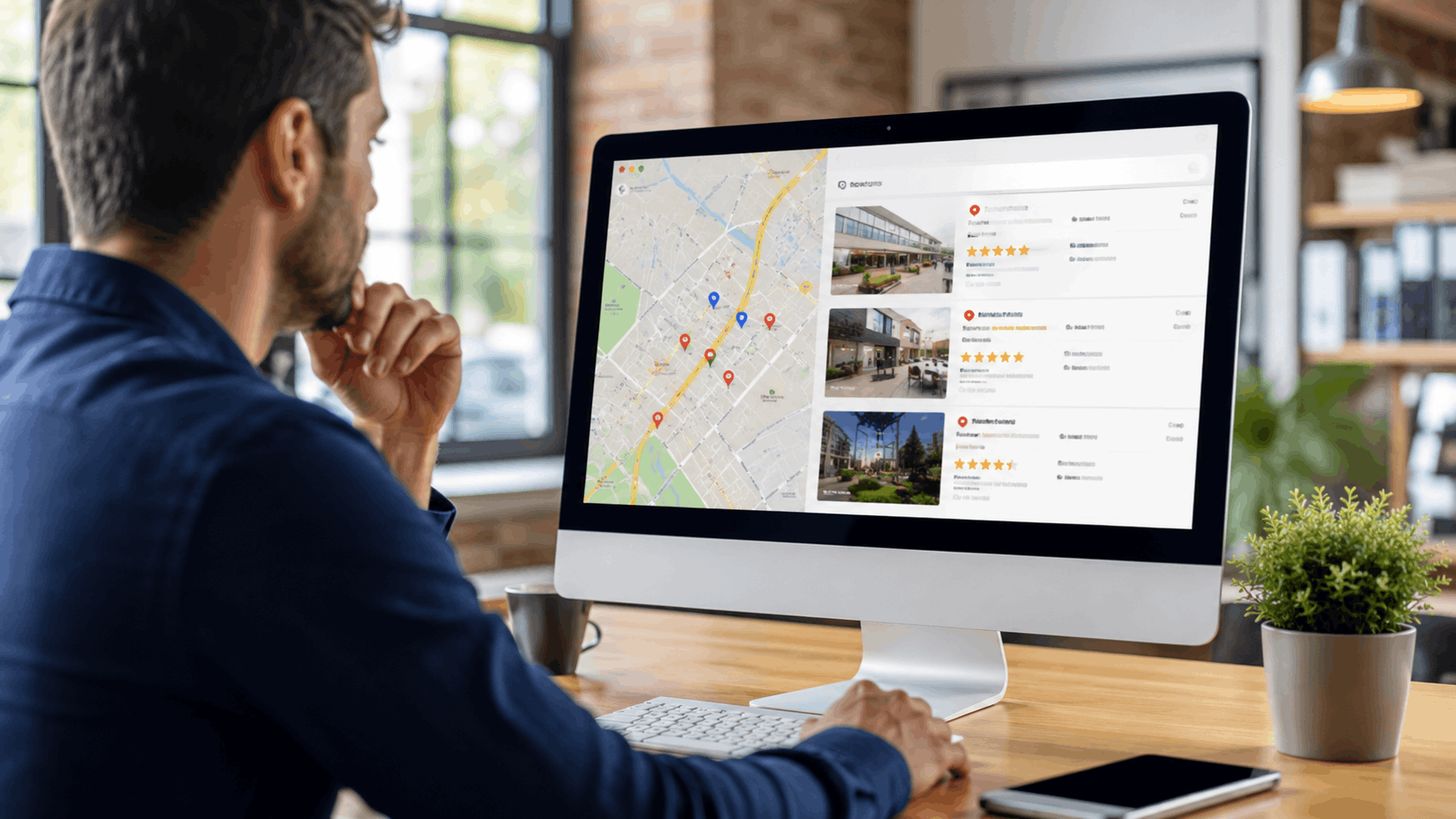
Reviews do double duty. They shape google reviews ranking inside the map pack and they sway customers deciding between three options. A business with 200 reviews at 4.8 stars looks safer than one with six reviews, and Google reads it that way too.
Local seo reviews work across four dimensions:
- Quantity - How many reviews you have overall.
- Quality - Your average star rating.
- Recency - How fresh the latest reviews are.
- Responses - Whether you reply and how.
The smart approach is steady and honest. Ask every satisfied customer, make it easy with a short link, and never pay for fake reviews. Google's review content policy bans incentivized and fake reviews, and getting caught can wipe out your standing.
How Review Count and Star Ratings Influence Ranking
Review count and star rating both feed map pack position. More reviews generally signal more trust, and a higher average rating reinforces it. But the relationship is not as simple as "most reviews wins."
Recency and steadiness matter a lot. Twenty reviews spread over a year look more natural than twenty that all arrived in one week. A sudden burst can even trip Google's spam filters, since real businesses earn reviews gradually.
The star rating local seo effect kicks in once you have enough volume to be believable. A 4.9 from 5 reviews carries less weight than a 4.6 from 150. Volume gives the rating credibility.
The practical move is a simple, ongoing ask. Request a review from each happy customer right after the job, every week, all year. That steady drip beats any one-time push.
Keywords in Reviews and What Customers Say
The words customers write in reviews help Google connect you to searches. When someone writes "they fixed our tankless water heater in Oakwood the same day," that review now ties your business to those exact review keywords.
You cannot script reviews, and you should not try. But you can nudge customers toward detail. A prompt like "if you have a minute, mention what we did and how it went" leads to richer customer review content than a blank star request.
Detailed reviews also help future customers picture themselves working with you. A review naming a specific service and a specific neighborhood feels real and local. That builds trust on both sides of the search.
Keep it natural. Never ask someone to stuff in keywords or repeat your business name. Honest, specific reviews in the customer's own words do more than any forced phrasing.
Responding to Reviews the Right Way
Replying to reviews shows both Google and customers that someone is paying attention. Responding to google reviews, good and bad, signals an engaged business. It also gives you a chance to add helpful context.
For positive reviews, a short thank-you that mentions the service keeps it genuine. Something like "Thanks for trusting us with your roof repair, glad we got it sealed before the next storm" reads warm and human.
For negative reviews, stay calm and professional. A good review response strategy acknowledges the issue, avoids arguing, and offers to make it right offline. Future customers read these replies and judge how you handle problems.
Aim to respond within a few days. Quick, steady replies show the profile is tended and that real people stand behind the work.
See where you rank - block by block.
Vouch Local maps your local rankings across every neighborhood and shows you exactly who wins each area. Start free, no credit card required.
How Distance and Searcher Location Change Your Results
Two neighbors can search the same thing and see different map packs. That is proximity local seo at work. Google personalizes results based on where each person stands, so there is no universal ranking.
Location based search results mean your visibility is really a map, not a number. Understanding that changes how you measure success and where you focus effort.
Why Your Ranking Changes Block by Block
Within a single city, rankings shift across neighborhoods and zip codes. A business strong near the town center might be invisible on the outskirts. This neighborhood ranking pattern is normal and expected.
Picture a dentist near a busy commercial strip. They might rank first for searches within a mile, then fall off sharply a few zip codes away where closer dentists take over. The same business, very different positions.
This is why a single "we rank number one" claim can mislead. Number one for whom, and standing where? Zip code search results vary so much that one number tells almost nothing about real reach.
The honest way to think about it is coverage. How much of your service area do you show up in, and where are the gaps? That question leads straight to grid tracking.
Grid-Based Rank Tracking to See the Full Picture
Grid rank tracking checks your ranking at many points across a map instead of one spot. It places a grid of points over your service area and records where you rank at each one. The result is a local rank map that shows your real coverage.
With a tool like the Rank Map feature, you can see green where you rank well and red where you do not. That visual makes patterns obvious. Maybe you dominate the east side but lose the west completely.
This view turns guesswork into a plan. Once you see the red zones, you know exactly where to push, whether through reviews, links, or content aimed at those areas. Businesses with several locations can use the multi-location rank map to track each one.
Checking the grid monthly shows whether your work is paying off. You watch the red turn green over time, which is far more useful than a single fluctuating rank number.
Serving a Wider Area Without an Office There
A service area business serves customers at their location instead of from a storefront. Plumbers, mobile groomers, and house cleaners often work this way. They can show up in nearby areas without a physical office in each one.
In Google Business Profile, these businesses set service areas instead of, or alongside, an address. That tells Google where they work. But distance still applies, so reaching the far edge of a large service area is harder than the streets near your base.
Set realistic expectations. You can expand local reach with strong reviews and local links, but you will rarely outrank a well-established business that sits right in a neighborhood you only visit. The closer competitor has a built-in proximity edge there.
Focus first on the areas you can realistically win, usually the zones nearest your base. Build prominence there, then push outward. Trying to rank everywhere at once spreads your effort too thin.

Links, Citations, and Mentions That Build Prominence
Prominence grows when other sites point to you and mention you. Local citations and local link building tell Google your business is real, established, and part of the community. These off-profile signals carry serious weight.
Here is how the main types compare:
- Citations - Listings on directories with your name, address, and phone. They confirm you exist and where.
- Backlinks - Links from other websites to yours. They pass authority and trust.
- Mentions - Your business name appearing in articles or posts, even without a link. They build recognition.
Citations from Directories and Local Listings
Business citations live on sites like Yelp, the Better Business Bureau, Apple Maps, and industry directories. Each consistent listing reinforces that your details are accurate. Directory listings local seo is less about quantity and more about consistency.
The major data sources matter most. Getting your details right on the big platforms feeds Google clean, matching data. Niche directories for your trade or your city add a local layer on top.
Inaccurate listings hurt more than missing ones. An old address on a forgotten directory contradicts your real info and confuses Google. Finding and fixing those mismatches removes the drag.
Start by searching your business name and phone number to find where you appear. Correct the wrong ones, claim the unclaimed ones, and keep a record so you can recheck them later.
Earning Backlinks from Local Sources
Local backlinks come from sources rooted in your area. Links from local news outlets, the chamber of commerce, community blogs, and neighborhood associations raise your prominence in ways national links cannot. They tell Google you matter locally.
Community link building can be active. Sponsoring a youth sports team, a charity 5K, or a school fundraiser often earns a link from the organizer's site. Partnering with a nearby non-competing business for a cross-promotion can do the same.
Local events are a steady source. A coffee shop hosting a monthly art show, a gym running a free community class, or a contractor speaking at a homeowners meeting all create reasons for local sites to link. The work itself builds the link.
Quality beats volume here. A handful of genuine links from respected local sources outweighs dozens of low-value ones. Aim for relevance and trust over raw numbers.
Spotting Competitor Links and Outreach Gaps
Competitor link analysis shows where your rivals earn their authority. If a competitor consistently outranks you, looking at who links to them reveals the sources you are missing. Often it is the same chamber, the same local paper, the same sponsorship pages.
The Competitor Links feature in Vouch Local maps out where competitors get their backlinks. That gives you a target list of sites that already link to businesses like yours. Those are the most realistic links for you to chase.
Local outreach is how you go after them. A short, friendly message to a local site explaining why you would be a good fit often works. Automated outreach tools can handle the volume while keeping the message personal.
The goal is to close the gap. Once you see the links your competitors have and you do not, you have a clear path. Win even a few of those, and your prominence catches up.
Website Signals Google Reads Behind the Scenes
Your website supports your map pack ranking even though the map pack shows your profile. Google connects the two. A strong local seo website with clear content, fast pages, and proper structure reinforces what your profile claims.
On-page local signals are the details Google reads from your site. They confirm what you do and where, and they back up your profile with depth.
Location and Service Pages That Match Searches
Dedicated service pages help Google understand each thing you offer. A separate page for "water heater installation" with real detail ranks better than one page that lists everything in a sentence. Service pages local seo gives each service room to breathe.
Location landing pages do the same for places. A business serving several towns can build a page for each one, describing the work they do there. These pages should read naturally and mention real local details, not just swap the town name.
Write for people first. A good location page talks about the neighborhoods you serve, the common issues homes there face, and how you help. Stuffing town names into thin pages reads as spam to both Google and visitors.
Keep the pages honest and specific. If you genuinely work in a place, say what you actually do there. That specificity is what makes the page rank and what makes a reader trust it.
Closing Content Gaps Against Competitors
Content gap analysis shows what topics your competitors cover that you do not. If three rivals have detailed pages on a service you only mention briefly, that is a gap. Filling it can widen your visibility.
The Content Gaps feature finds these openings by comparing your site to competitors. It surfaces the questions and topics customers search that your site stays silent on. Each gap is a chance to capture searches you are currently missing.
A solid local content strategy turns those gaps into pages. Write helpful guides, FAQs, and service explanations that answer real questions. Cover the seasonal problems and common repairs your customers actually search.
Prioritize gaps with clear demand. Not every missing topic is worth writing about, but the ones tied to services you offer and searches people make are worth the effort.
Mobile Speed and Local Schema Markup
Most local searches happen on phones, so mobile site speed matters. A page that takes six seconds to load on a phone loses visitors and ranking. Compressed images, clean code, and good hosting keep pages quick.
You can check your speed with Google PageSpeed Insights, which scores your mobile performance and suggests fixes. Aim for pages that load in under three seconds on a typical phone connection.
Local business schema is code that labels your information for search engines. In plain terms, it tells Google "this is the business name, this is the address, these are the hours" in a format machines read easily. It helps Google trust and display your details correctly.
Most modern site platforms can add schema with a plugin or built-in setting. You do not need to write code by hand. Adding it once removes ambiguity and helps your site and profile line up.
See where you rank - block by block.
Vouch Local maps your local rankings across every neighborhood and shows you exactly who wins each area. Start free, no credit card required.
Common Mistakes That Keep Businesses Out of the Map Pack
Some businesses do good work and still cannot crack the map pack. Often a fixable error is the cause. These local seo mistakes are common, and most map pack ranking problems trace back to a few repeat offenders.
Duplicate or Suspended Profiles
Duplicate gbp listings happen when a business ends up with two or more profiles for the same location. Maybe an old one was created years ago and forgotten. Google splits the signals between them, weakening both.
To find duplicates, search your business name and address on Google Maps and look for repeats. Google has a process to merge or remove duplicates so all your reviews and signals consolidate into one strong profile.
Profile suspension is more serious. Google can suspend a listing for policy violations, sudden major edits, or suspected fraud. A suspended profile vanishes from the map pack entirely.
Recovery means fixing whatever triggered the suspension and filing a reinstatement request with Google. Be patient and accurate, since rushing edits can make things worse. Avoiding shady tactics in the first place is the best protection.
Keyword Stuffing the Business Name
Some owners add keywords to their business name on the profile, like "Joe's Plumbing Best Drain Cleaning Emergency Repair." That business name keyword stuffing violates Google's rules. Your profile name must match your real-world name.
It can feel like it helps short term, but it risks a hard penalty. Google's gbp guidelines are clear that the name field is for your actual business name only. Competitors can report you, and Google can suspend the listing.
The right move is to use your true name and put your services in the proper fields. The services section, description, and your website are where keywords belong. Those places reward you without breaking rules.
If you already have keywords in your name, remove them. A short-term ranking dip is better than a long-term penalty or suspension.
Ignoring Reviews and Outdated Information
Unanswered reviews and outdated business info both erode trust. A profile with wrong hours, an old address, or a string of ignored reviews signals neglect. Google and customers both notice.
Neglected reviews are a missed chance. Every review, especially a negative one, deserves a reply. Silence makes a bad review look worse and tells future customers no one is minding the shop.
Stale information causes real harm. A customer who drives to your listed address only to find you moved leaves frustrated, and that frustration can become a bad review. Keeping hours and address current prevents this.
Regular upkeep is simple but easy to skip. Set a recurring reminder to check your profile monthly, reply to reviews weekly, and update anything that changed. A tended profile beats a neglected one every time.
A Practical Plan to Improve Your Map Pack Ranking
The factors above only help if you act on them in order. Here is a repeatable routine to improve map pack ranking. It connects the pieces into a simple local seo plan you can run month after month.
Auditing Your Current Local Visibility
Start by measuring where you stand. A local seo audit looks at your profile, your reviews, your citations, and your grid rankings. You cannot improve what you have not measured.
Run a grid scan to see your real coverage across the service area. The Local Snapshot tool gives a quick visibility check that shows where you rank and where you do not. That map becomes your baseline.
Then review the basics. Is your primary category right? Are your NAP details consistent? Are services filled out and photos current? A simple checklist catches the obvious gaps fast.
Write down what you find. A clear starting picture lets you measure progress and prioritize. Without it, you are guessing whether your changes worked.
Setting Priorities Based on What Moves the Needle
Not every fix matters equally. Set local seo priorities by weighing impact against effort. Some changes take ten minutes and lift rankings; others take months.
Quick wins come first. Fixing your primary category, correcting NAP details, completing your services, and replying to reviews are fast and effective. These ranking improvements often show results within weeks.
Longer projects follow. Building local links, writing location and service pages, and earning a steady flow of reviews take time. Plan them as ongoing work, not one-time tasks.
Match effort to your red zones from the grid. If you are weak on the west side, target reviews, links, and content tied to that area. Aim your energy where the map shows the biggest gaps.
Tracking Progress and Adjusting Over Time
Local rankings move, so track them. Check your grid monthly to track local rankings and watch red zones turn green. A single check tells you little, but a trend over several months tells the real story.
The dashboard in Vouch Local keeps your rankings, reviews, and tasks in one view so you can spot shifts early. When a ranking drops, you can react before it costs you calls.
Ongoing local seo is a rhythm, not a sprint. Post weekly, ask for reviews after every job, recheck citations quarterly, and rerun your grid monthly. Steady habits hold rankings better than occasional bursts.
Adjust as you learn. If a competitor surges, study their links and content and respond. The businesses that stay on top treat local SEO as routine upkeep, like keeping the lights on.
See where you rank - block by block.
Vouch Local maps your local rankings across every neighborhood and shows you exactly who wins each area. Start free, no credit card required.
Final Thoughts
How Google decides which businesses show up in the local map pack comes down to relevance, distance, and prominence working together. A complete profile, steady reviews, consistent citations, local links, and a clean website all feed those three signals.
None of it happens overnight, and none of it stays fixed on its own. The businesses that win the map pack are the ones that tend their profile, earn honest reviews, and track their real coverage across the map. Start with an audit, fix the quick wins, then build the rest month by month.
Frequently Asked Questions About the Local Map Pack
How long does it take to show up in the map pack?
A brand-new business profile usually takes a few weeks to a few months to gain real visibility, since Google needs time to trust it. Existing businesses that fix their profile and add reviews often see movement in four to eight weeks. The map pack timeline depends on competition, your category, and how complete your profile is. Local ranking speed picks up when you have consistent details, steady reviews, and local links.
Why does my business show up for some searches but not others?
This usually comes from relevance and category matching. If your profile lists "plumber" but not "drain cleaning," you may rank for one and miss the other. Inconsistent map pack visibility across queries often traces back to missing services or the wrong primary category. To fix uneven search query ranking, add the exact services and terms customers use to your profile and website.
Can I pay Google to be in the map pack?
No, you cannot pay for the organic three-pack spots. You can run local search ads, which appear marked as sponsored above or within the local results. Paid map pack placement does not exist as a direct purchase. Ads can buy temporary visibility, but they will not improve your organic ranking, which still depends on relevance, distance, and prominence.
How many reviews do I need to rank well?
There is no magic number. What matters is how you compare to competitors, how recent your reviews are, and your average rating. If your top rivals have 150 reviews, you want to be in that range and growing steadily. Review count ranking is relative, so focus on a steady flow of genuine reviews rather than chasing a fixed total.
Does my exact address affect my ranking?
Yes. Your address sets the point Google measures distance from, so it shapes which searches you appear for. Business address ranking matters most for searches near your location. The proximity factor means home-based and service-area businesses should set accurate service areas, and they will rank strongest in the zones closest to their base.
What is grid rank tracking and why does it matter?
Grid rank tracking checks your position at many points across your service area, not just one. Grid rank tracking explained simply: it places a grid of dots on a map and records your rank at each dot. A single rank number hides the fact that you might rank first in one neighborhood and tenth in another. A local rank grid shows your true coverage so you know exactly where to improve.
How often should I update my Google Business Profile?
Post updates weekly or biweekly, add a few new photos monthly, and review your info every month for accuracy. To maintain your profile well, check hours before holidays and update services when they change. Steady gbp maintenance helps more than uploading everything once and going quiet. Regular small updates signal an active business.
Will negative reviews push me out of the map pack?
A few negative reviews mixed with many positive ones will not push you out, and they can even make your profile look more credible. The negative reviews impact grows only if they pile up unanswered or drag your average down sharply. Good review management means replying professionally and fixing issues. If a review is fake or violates Google's policies, you can dispute it for removal.
Do backlinks really help a local business rank?
Yes, backlinks build prominence, which is one of Google's three local signals. For backlinks local ranking, links from local sources count most: the chamber of commerce, local news, community groups, and nearby partners. The honest answer to whether links help local SEO is that quality local links matter more than volume. Small businesses can earn them by sponsoring events, partnering locally, and joining community organizations.